
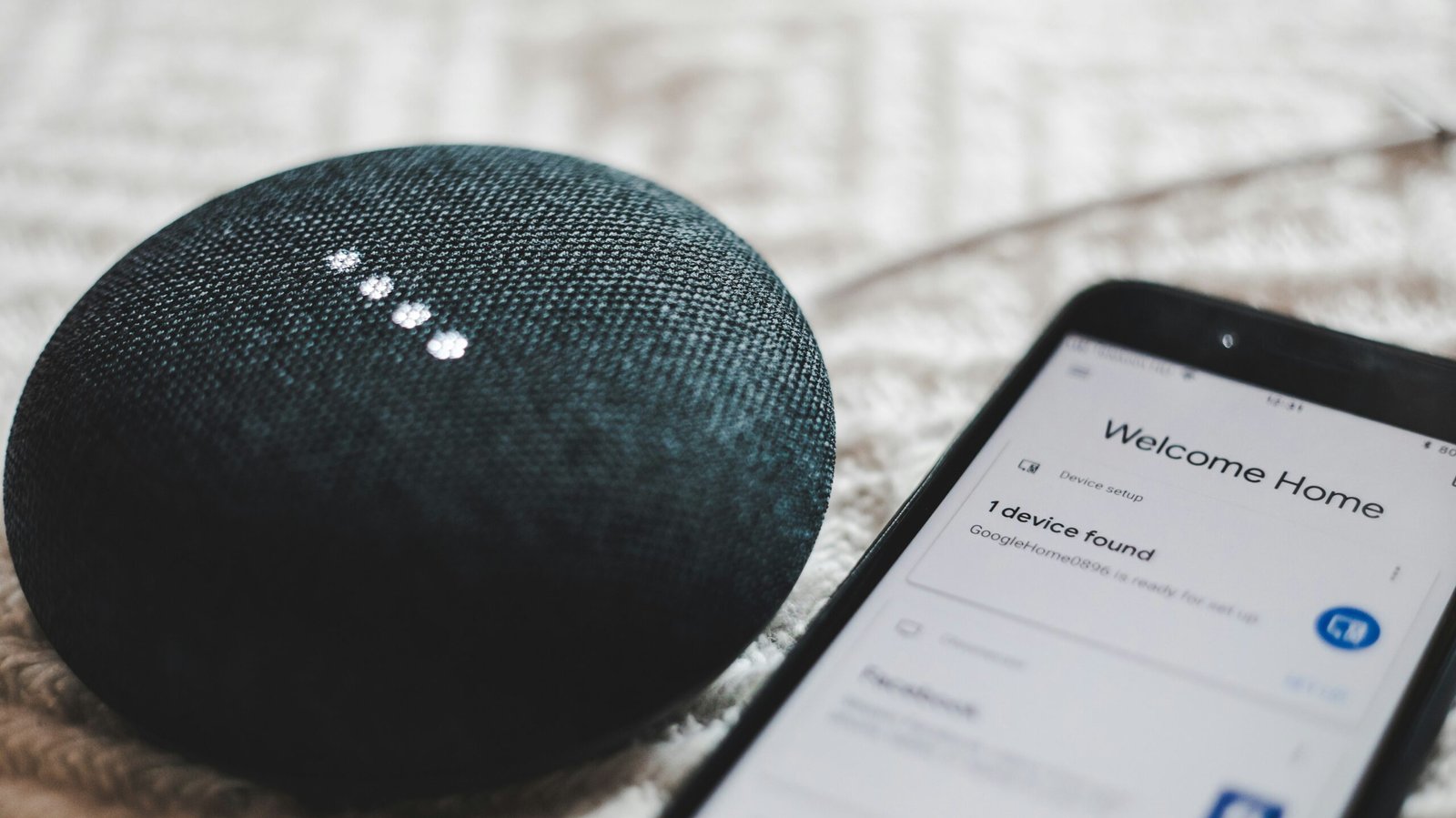
Scope: This article examines command‑recognition behavior observed in smart home voice assistants. It focuses on mechanisms, reproducible tendencies, and user‑reported inconsistencies. It does not provide troubleshooting steps, recommendations, or product‑specific guidance. The goal is to document misinterpretation as an observable, system‑agnostic phenomenon.
Overview
Voice assistant misinterpretation often arises from the way voice assistants rely on acoustic input, language models, and contextual inference to interpret commands. Variability in any of these layers can lead to misinterpretation, producing recognizable patterns shaped by background noise, accents, phrasing, device placement, and multi‑user interactions.
Table of Contents
Mechanistic Basis of Voice Assistant Misinterpretation
Several mechanisms shape how voice assistants interpret commands:
- Acoustic capture: Microphones detect speech differently depending on distance, angle, and room acoustics.
- Noise filtering: Background noise, overlapping speech, and reverberation influence signal clarity.
- Language modeling: Assistants infer intent based on statistical patterns rather than exact phrasing.
- Wake‑word detection: Sensitivity thresholds determine when the assistant begins listening.
- Contextual inference: Systems use prior interactions and environmental cues to interpret ambiguous commands.
- Multi‑device arbitration: Multiple assistants may respond simultaneously or defer based on internal logic.
These mechanisms create consistent categories of misinterpretation.
A Taxonomy of Voice Assistant Misinterpretation Patterns
1. Partial Command Recognition
The assistant captures only part of a sentence, often due to noise, distance, or overlapping speech.
2. Incorrect Intent Mapping
The assistant interprets a command as a different action when phrasing is ambiguous or acoustically similar.
3. Wake‑Word False Positives
The assistant activates unexpectedly when background speech resembles the wake word.
4. Wake‑Word Misses
The assistant fails to activate when the wake word is spoken softly, quickly, or with accent variation.
5. Multi‑User Conflicts
Different voices produce different recognition accuracy, especially in households with varied accents or speaking styles.
6. Context Drift
The assistant applies context from a previous interaction, leading to misinterpretation of the current command.
7. Device Arbitration Variability
Multiple assistants in the same room may respond inconsistently depending on proximity, sensitivity, and arbitration logic.
Interpretation Drift Curve
Misinterpretation often follows a recognizable progression:
- Occasional missed wake words
- Partial command recognition
- Incorrect intent mapping
- Context drift across interactions
- Persistent misinterpretation in specific environments
This curve reflects how acoustic and contextual factors accumulate over time.
Acoustic Environment Effects
Voice assistants interpret speech differently depending on:
- Room size and echo
- Hard vs. soft surfaces
- Background appliances
- Music or TV dialogue
- Distance and angle from the device
These factors influence how clearly speech is captured.
Language and Accent Variability
Speech‑recognition systems show consistent patterns across:
- accent variation
- regional phrasing
- speech rate differences
- intonation patterns
- non‑standard grammar
These variations influence how the assistant maps speech to intent.
Multi‑User and Multi‑Device Dynamics
In shared environments, assistants may show:
- different accuracy levels for different speakers
- inconsistent arbitration between nearby devices
- misinterpretation when multiple people speak at once
- variability in how children’s voices are recognized
- context drift when switching between users
These patterns reflect the interaction between acoustic capture and identity‑agnostic processing.
Patterns in User‑Reported Behavior
Users commonly describe:
- assistants responding to the wrong command
- missed wake‑word activations
- false activations during conversations or TV dialogue
- inconsistent recognition across household members
- commands interpreted differently depending on phrasing
- assistants activating from another room
- misinterpretation during background noise
These patterns appear across ecosystems and device generations.
Why This Matters
Misinterpretation patterns shape how voice assistants behave in daily use. Understanding these patterns provides context for how speech‑recognition systems operate in real‑world environments without implying malfunction, fault, or user error.
Frequently Observed Questions
Why does the assistant mishear commands?
Acoustic conditions, phrasing, and language variability influence recognition.
Why does it activate unexpectedly?
Background speech may resemble the wake word.
Why do different people get different results?
Voice characteristics vary across users.
Why does phrasing matter?
Assistants infer intent based on statistical patterns.
Sources of Observations
Patterns described in this article reflect user‑reported behavior across public forums, reproducible tendencies observed in smart home environments, and known characteristics of speech‑recognition systems.
For related patterns involving smart bulb connectivity, see Smart Bulb Connectivity Issues.
For related patterns involving connectivity, sensor accuracy, and multi‑device coordination, see the Smart Home Category Hub.